
Royal Assent for the Planning & Infrastructure Bill: What It Means for SDS Readiness
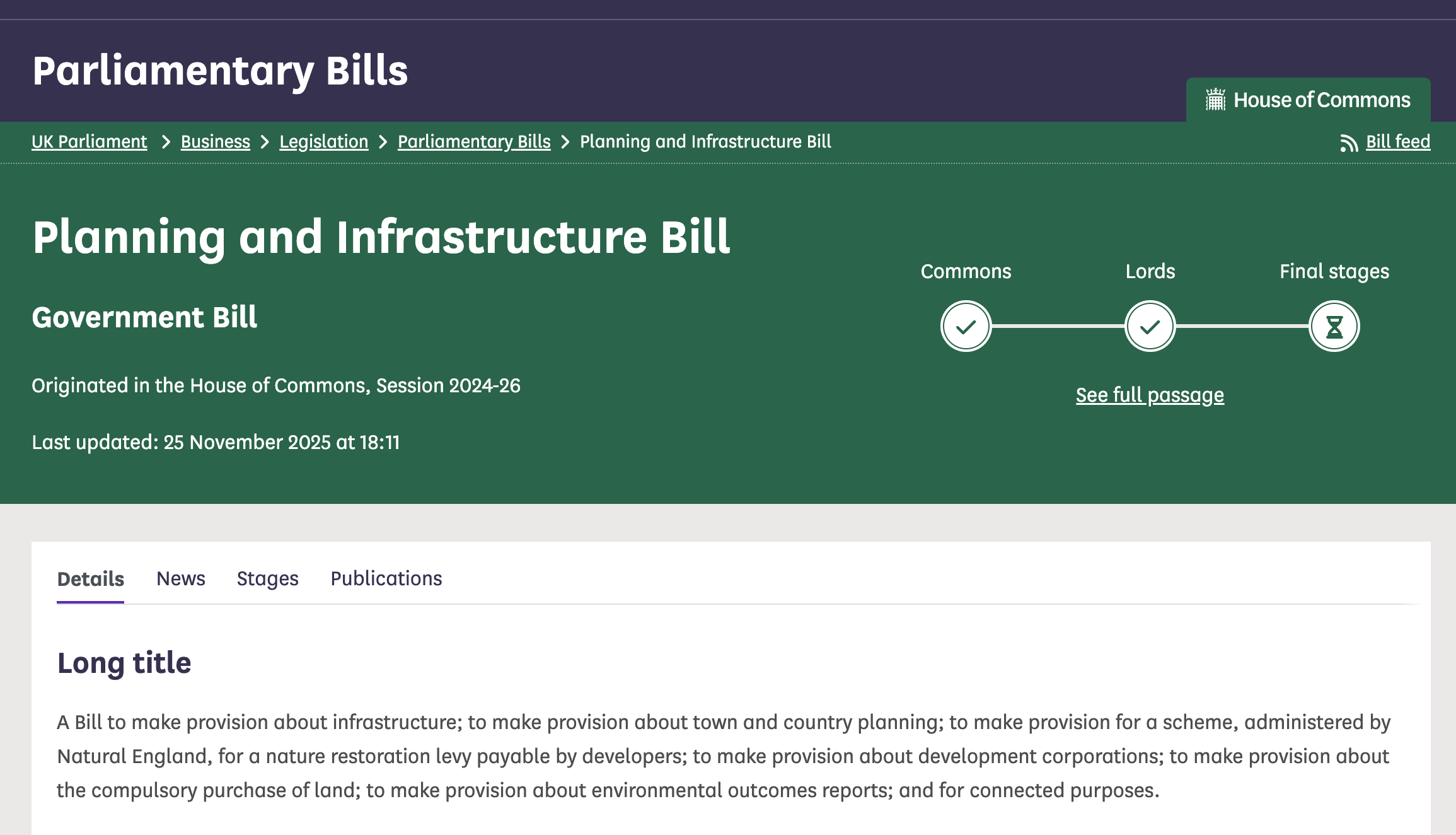
The Planning and Infrastructure Bill has cleared the House of Lords and is heading for Royal Assent, a landmark moment for strategic planning in England. Once enacted, Spatial Development Strategies (SDS) will become a statutory requirement for combined authorities, county councils, and emerging strategic planning boards. This is the first time in over a decade that England will have a mandated strategic tier of planning.
We have been working closely with the PAS team on SDS readiness and many of you reading this will have already been involved in the network drop in sessions and in person workshops. This milestone reinforces why preparation matters. Authorities that start now will be better placed to deliver quickly and confidently when statutory duties commence.
Why SDS Readiness Matters Now
SDS is not a “big Local Plan.” It’s a high-level, vision-led spatial strategy that sets broad locations for growth and identifies the strategic infrastructure needed to deliver it. It will sit alongside Local Plans as part of the statutory development plan, shaping housing distribution, transport priorities, and investment frameworks.
The challenge? While Royal Assent provides certainty, secondary guidance and detailed regulations will take time and the onset of devolution and LGR will cause huge disruption. Waiting for every detail is risky. Instead, councils and combined authorities should focus on foundations-first and no-regrets actions steps that will be essential under any scenario.
Foundations: What to Think About Now
PAS will soon publish detailed guidance on SDS foundations including:
role assessment
evidence and data audit
engagement strategy
delivery and governance
digital and innovation
skills and resources and
project delivery plans
This is part of the wider support work for a Spatial Development Strategy (SDS) readiness guide and toolkit which is due to be published at the end of January 2026 and PAS will publishing linked Top Tips for SDS Readiness on their website at the end of November, sign up for bulletins here.
As we look back on this year, it feels right to reflect on this significant marker by re-profiling the work undertaken by the Strategic Planning Group, convened by Prior + Partners, and chaired by Catriona Riddell which I was incredibly privileged to be part of with a wide range of industry experts. From November to March, the Group brought together leading voices from across the sector to produce Planning Positively for the Future, a landmark set of recommendations that will help us navigate how Spatial Development Strategies (SDS) deliver good growth, integrate national priorities, and embed resilience and wellbeing into planning. This collaborative effort has provided a clear vision for a new era of strategic planning and also give strong foundations on wider thinking on SDS's.
Foundations for SDS Readiness: Insights from the Strategic Planning Group
With the Planning and Infrastructure Bill now heading for Royal Assent, the urgency to prepare for SDS is real. The foundations which we worked up from from the Strategic Planning Group represent the essential building blocks for a reformed plan-led system and will underpin every Spatial Development Strategy, regardless of how secondary guidance evolves.
1. Governance and Leadership
SDSs will be the “centre of a reformed plan-led system.” Early work on governance structures, decision gateways, and cross-boundary collaboration is essential to avoid delays later. Strong place leadership matters: Mayors and senior officers should champion SDS as a tool for long-term investment and democratic legitimacy.
2. Vision and Ambition
SDSs must set out visual and compelling strategies with clear intent—a “golden thread” linking national priorities to local delivery. Begin shaping a narrative that is bold, place-specific, and measurable. This will underpin engagement and investor confidence.
3. Evidence and Data
The report calls for a focused and streamlined evidence base—not excessive data collection, but clear baseline analysis and predictive modelling. Joint commissioning across SDS geographies is a low-risk way to optimise resources and ensure consistency.
4. Digital Enablement
SDSs must be digitally enabled for the 21st century. Start planning for GIS capability, data standards compliance, and interactive mapping. Digital-first approaches will accelerate plan-making and improve transparency.
5. Integration with Wider Priorities
SDSs will need to embed environmental resilience and health outcomes alongside housing and economic growth. Align with Local Nature Recovery Strategies, climate adaptation plans, and health improvement duties—these will not go away.
What to look out for...
The work with PAS is gaining pace and in the next few weeks you will see some of the first outputs, practical tools and guidance to help authorities act with confidence:
- Top Tips for SDS Readiness (late November): A quick-start guide to help prioritise actions now.
- Readiness Toolkit (January): Templates for governance, evidence audits, and digital planning.
- Workshops and Drop-ins: Interactive sessions on engagement, data standards, and delivery planning designed to turn theory into practice.
These resources will ensure that every authority can start laying the groundwork for SDS today, turning the momentum of Royal Assent into meaningful action.
Final Thought
Royal Assent signals the start of a new era for strategic planning. SDSs will shape how England grows, economically, socially, and environmentally for decades to come. The question is not whether SDS will happen; it’s how ready we are to make it work.
Call to Action:
Join the PAS SDS Network and watch for updates on Top Tips and Toolkit resources.